
Pink eye, also known as conjunctivitis, is an inflammation of the transparent membrane that lines the eyelid and eyeball. This membrane is called the conjunctiva. When small blood vessels in the conjunctiva become swollen and irritated, they're more visible. This is what causes the whites of the eyes to appear reddish or pink.
Pink eye is most often caused by a viral infection. It also can be caused by a bacterial infection, an allergic reaction or — in babies — an incompletely opened tear duct.
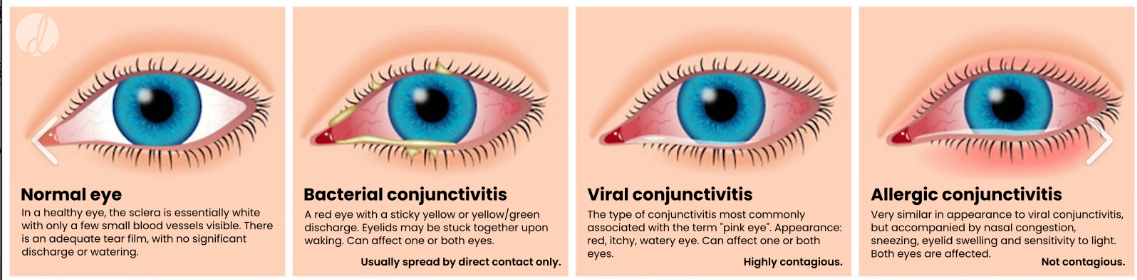
Viral conjunctivitis is the most common and contagious type of pink eye
Viral conjunctivitis usually causes burning, red eyes with a watery discharge. Viral pink eye is very contagious and spreads quickly among children and adults. Usually, viral pink eye is caused by the same virus that causes the common cold, producing a runny nose and sore throat. Less often, viral conjunctivitis can be caused by more serious viruses, such as COVID, bird flu, measles, or monkeypox.
Bacterial conjunctivitis is less common but very contagious
Bacterial conjunctivitis causes sore, red eyes, with a lot of sticky pus oozing out of the eye. Some people with bacterial pink eye have little or no discharge. The bacteria that cause this type of pink eye can be easily spread from person to person through hand-eye contact. Sometimes the bacteria that cause pink eye are the same as those that cause strep throat.
Allergic conjunctivitis is not contagious
Allergic pink eye makes your eyes very itchy, red, and watery. Your eyelids may get puffy. You might develop allergic pink eye if you have an allergic reaction to pollen, animals, cigarette smoke, pool chlorine, car fumes or something else in the environment. Allergic conjunctivitis is not contagious.
Symptoms of pink eye in one or both eyes include:
- Pink or red color in the white of the eye
- Swelling of the eyelids or thin layer that lines the white of the eye
- A discharge in one or both eyes that forms a crust during the night that may prevent your eye or eyes from opening in the morning.
- Sensitivity to light, called photophobia
- Watery, teary eyes
- Eye discharge (pus or mucus) that may be clear, yellow, white, or green
- Itching, irritation, burning of the eye
- Feeling like something is in the eye or an urge to rub the eye
- Contact lenses feel uncomfortable or do not stay in place on the eye
You can get pink eye from:
- Close personal contact, such as touching or shaking hands.
- Contact with droplets from the air after an infected coughs or sneezes.
- Touching objects and surfaces with germs on them before washing your hands.
When to see a doctor
There are serious eye conditions that can cause eye redness. These conditions may cause eye pain, a feeling that something is stuck in your eye, blurred vision and light sensitivity. If you experience these symptoms, seek urgent care.
People who wear contact lenses need to stop wearing their contacts as soon as pink eye symptoms begin. If your symptoms don't start to get better within 12 to 24 hours, make an appointment with an eye healthcare professional to make sure you don't have a more serious eye infection related to contact lens use.