
The hantavirus naturally infects rodents and are occasionally transmitted to humans. Infection in people can result in severe illness and often death, although the diseases vary by type of virus and geographical location. In the Americas, infection has been known to lead to hantavirus cardiopulmonary syndrome, a rapidly progressive condition affecting the lungs and heart, while in Europe and Asia hantaviruses have been known to cause hemorrhagic fever with renal syndrome, which primarily affects the kidneys and blood vessels. There have been a handful of documented cases of transmission through contact with other infected people. Person-to-person transmission of the virus has only been recorded with a strain of the virus found in South America called the Andes virus.
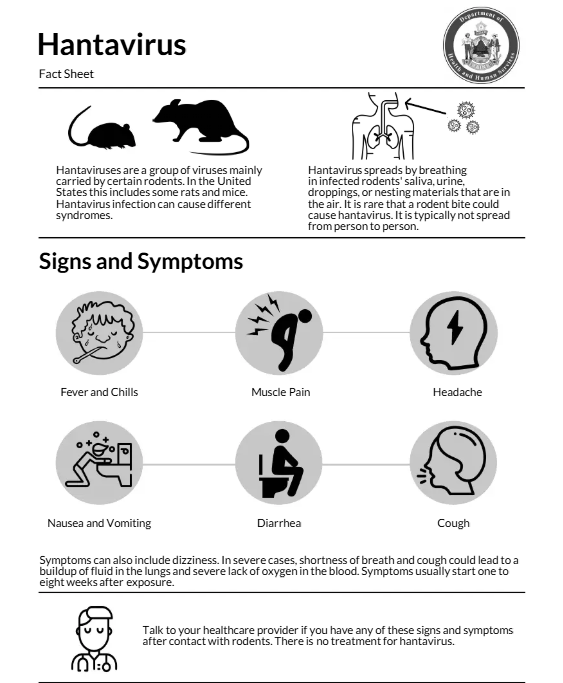
The virus is present in rodent urine, feces or saliva. You can come in contact with the virus in the following ways:
- Inhaling virus particles when they become airborne from disturbed rodent droppings or nesting materials. This is the most likely form of transmission.
- Eating food contaminated with mouse saliva, urine or droppings.
- Touching things contaminated with the virus, such as a nest, and then touching your mouth, eyes or nose.
- Being bitten or scratched by an infected rodent.
In the United States, hantavirus is most common in rural areas of the West. However, any exposure to rodent habitats can increase the risk of disease.
Common sites for exposure to rodent nests, urine and droppings include:
- Farm buildings
- Infrequently used buildings, such as storage sheds
- Campers or seasonal cabins
- Campsites or hiking shelters
- Attics or basements
- Construction sites
- Outdoor spaces such as utility work, pest control or farming
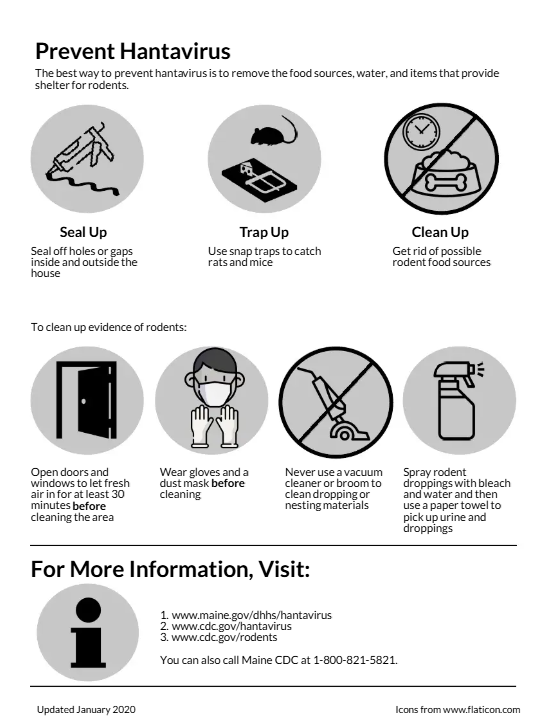
Keeping rodents out of your home and workplace can help reduce your risk of hantavirus infection.
- Block access. Mice can squeeze through holes as small as 1/4 inch (6 millimeters) wide. Seal holes with wire screening, steel wool, metal flashing or cement.
- Close the food buffet. Wash dishes promptly, clean counters and floors, and store your food — including pet food — in rodent-proof containers. Use tight-fitting lids on garbage cans.
- Reduce nesting material. Clear brush, grass and junk away from a building's foundation.
- Set traps. Spring-loaded traps should be set along baseboards. Exercise caution while using poison-bait traps, as the poison also can harm people and pets.
- Move rodent-friendly yard items. Move woodpiles or compost bins away from the house.
- Air out unused spaces. Open up and air out cabins, campers or rarely used buildings before cleaning.
Do not sweep or vacuum rodent droppings or nest areas. Safe cleaning can help prevent the spread of viruses.
- Wear a type of mask called a respirator and rubber or plastic gloves.
- Spray the nest, droppings or dead rodent with a household disinfectant, alcohol or bleach and water solution. Let it sit for five minutes.
- Use paper towels to clean up and dispose of towels in garbage.
- Mop or sponge the area with a disinfectant.
- Wash gloved hands and dispose of gloves and mask.
- Wash your hands thoroughly with soap and water.
The symptoms of hantavirus can worsen suddenly and may quickly become life-threatening. If you have flu-like symptoms that progressively worsen over a few days, see your healthcare professional. Get immediate medical care if you have trouble breathing.